
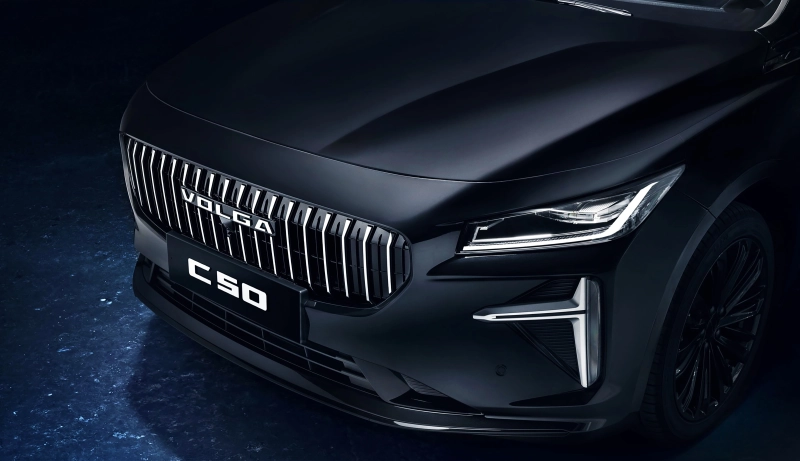
Nostalgia is a powerful currency, especially when options are limited. In an economically isolated Russia, where the assembly lines of Western giants have fallen silent, the Kremlin is resorting to a strategy of historical “rebranding”: resurrecting glorious names from the Soviet era to mask its total dependence on Chinese technology.
After the Moskvitch experiment (a Chinese JAC with a Russian emblem), it's the turn of the famous Volga to return to the roads. But under the shiny bodywork, it's not a Russian heart that beats, but one from Hangzhou.
Once a status symbol for the Soviet nomenclature and the favorite car of the KGB, the Volga is no longer just a model produced by GAZ, but has been transformed into a brand in its own right.
Production was established at the Nizhny Novgorod plant, a place with a special symbolism: until 2022, Volkswagen and Skoda models were assembled here. Today, after the exodus of European, American and Japanese manufacturers, the factory has been “retooled” to serve Russia’s new strategic partner: Geely.
The new Volga range debuted with two clear directions: an elegant sedan and a robust SUV. Although officially presented as new products, the technical reality is simple: they are Geely models with a restyled front grille to vaguely evoke the vertical design of the old Volgas.
Here's what the "job description" looks like for the new vehicles that promise to motorize Russia's middle (and state) class:
| Feature | Volga C50 (Sedan) | Volga K50 (SUV) |
| Base Model | Geely Preface | Geely Monjaro |
| Engine | 2.0 Turbo, 4-cylinder | 2.0 Turbo, 4-cylinder |
| Power Output | 150 HP / 200 HP | 238 HP |
| Transmission | 7-speed Automatic | 8-speed Automatic |
| Drivetrain | Front-Wheel Drive (FWD) | All-Wheel Drive (AWD) |
The Russian auto market has undergone a radical transformation in the past two years. From a competitive hub where major global players fought for supremacy, it has become an almost exclusive playground for Chinese brands.
"The Russian auto industry has basically turned into a giant packaging workshop. Kits are imported from China, wheels and a local logo are fitted, and the result is sold as a triumph of national industry."
Although visually the new Volga cars are modern and well-equipped — benefiting from advanced technical platforms from Geely (which also owns Volvo) — they highlight a harsh reality for Moscow: the inability to develop its own technology in a climate of isolation.
The revival of the Volga name is a clever marketing move, designed to give the Russian consumer a sense of familiarity and national pride. However, beneath the thin layer of patriotism lies a partnership for survival. It remains to be seen whether the public will embrace these technological “mongrels” or simply view them as Chinese cars with an inflated price tag.