
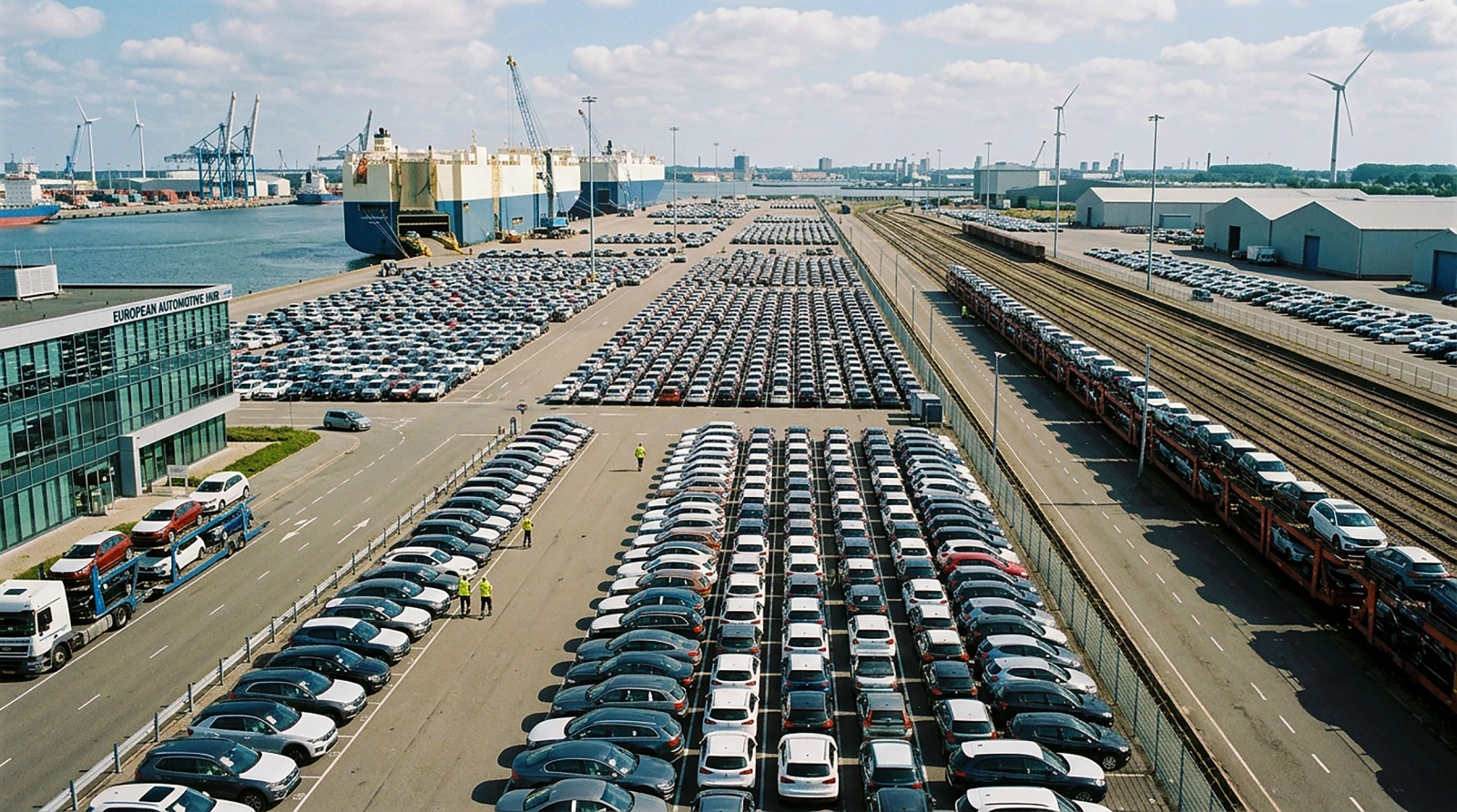
The European car market is set to maintain its upward trajectory in 2026, supported by growing demand for electrified vehicles and a gradual recovery in delivery volumes. In the first half of the year, the continental market surpassed the 9.1 million vehicle registration mark, with August developments confirming the rapid reconfiguration of consumer preferences.
The European car market (which includes the European Union member states, EFTA countries and the United Kingdom) recorded a sustained advance both in the last month of summer and in the first eight months of 2026.
In August, European buyers purchased 832,637 new cars, which represents an increase of 5.3% compared to the same period in 2025. The cumulative balance for the period January - August 2026 confirms this trend: 9,192,528 new cars were sold at the European level, marking an increase of 5.8% compared to the first eight months of the previous year.
The structure of sales by engine type indicates a profound and accelerated change in purchasing options. Green technologies continue to gain ground at the expense of traditional fossil fuels.
● Hybrid vehicles (HEVs): They remained the number one choice of European buyers. In August, 273,266 units were sold (+3.4%). During the first eight months, hybrid sales reached 3.3 million vehicles, up 10.5%.
● Fully electric vehicles (BEVs): They recorded the most spectacular advance in the market. With 243,207 units sold in August, the electric vehicle market grew by 52.2% compared to August 2025, climbing to second place in the top of preferences. Between January and August 2026, Europeans bought 2.1 million electric cars, an increase of 38.8% compared to last year.
● Plug-in hybrid vehicles (PHEVs): They recorded a positive evolution in August, with 94,133 units delivered, up 13.5%.
In direct contrast to the expansion of electrified vehicles, models powered exclusively by gasoline or diesel continue to rapidly lose market share on the continent.
● Gasoline engines: In August, 154,345 gasoline cars were sold, down 23.5% compared to the same period in 2025. For the period January – August 2026, the total volume stopped at 1.9 million units, recording a decline of 17.5%.
● Diesel engines: The decrease remains as sharp. In August, only 48,586 units were registered, which means a compression of 23.1%.
| Powertrain Type | August 2026 Sales | August Growth (vs. 2025) | Jan–Aug 2026 Sales | 8-Month Growth (vs. 2025) |
| Hybrids (HEV) | 273,266 units | +3.4% | ~3,300,000 units | +10.5% |
| Electric (BEV) | 243,207 units | +52.2% | ~2,100,000 units | +38.8% |
| Petrol / Gasoline | 154,345 units | -23.5% | ~1,900,000 units | -17.5% |
| Plug-in Hybrid (PHEV) | 94,133 units | +13.5% | N/A | N/A |
| Diesel | 48,586 units | -23.1% | N/A | N/A |
The balance of power among European automotive groups remains dominated by the large traditional players, although the growth rate varies considerably.
1. Volkswagen Group
The German manufacturer maintains its position as the market leader in Europe. In August, the Volkswagen Group sold 210,818 cars (-3.6%). In the first eight months of 2026, total volume reached 2,359,023 units, recording a slight increase of 0.9%.
2. Stellantis
The Stellantis Group ranks second in the continental market. In August, the company delivered 109,823 vehicles (+3.5%). In the first eight months of the year, Stellantis achieved total sales of 1,360,488 cars, up 4.7% compared to the previous year.
3. Renault Group and the Dacia brand
The podium of major manufacturers is completed by the Renault Group, which delivered 71,906 cars in August (-4.4%) and 857,937 vehicles between January and August (-3.3%).
Within the French group, the Dacia brand recorded a slight moderation in volumes:
● In August, Dacia sold 32,144 cars at European level, down 12.9%.
● In the first eight months, the brand accumulated 360,657 vehicles sold, representing a 9.7% decline compared to the same period in 2025.
The 9.1 million new car sales in the first eight months of 2026 confirms that the European car market remains dynamic. However, the paradigm shift is evident: the strong advance of hybrid and electric versions is reconfiguring traditional hierarchies, and manufacturers accelerating their transition to electrification are capturing most of the growth.