
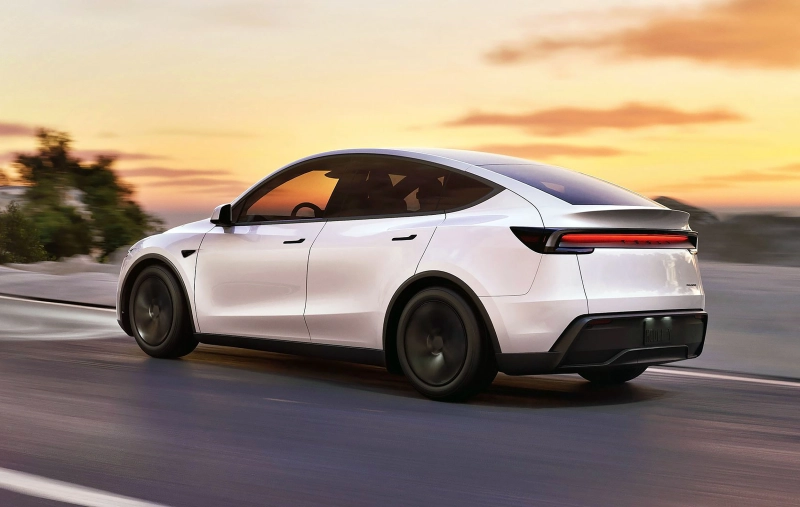
The European auto market seems to have entered a "roller-coaster" regime in the first three months of 2026. After a start to the year in which it seemed to have entered a shadow cone, the Tesla Model Y managed a spectacular comeback, catapulting itself from position 42 in January directly to the first step of the podium in March.
The question on all analysts' lips is: are we witnessing a definitive paradigm shift or is it just a side effect of record prices at the pump?
If January was as "glorious" for Tesla as a car running out of battery in the field (42nd place), and February brought a timid recovery (14th place), March was a resounding success. According to data provided by DataForce, the American model recorded 33,723 units sold, a dizzying 117% increase compared to March 2025.
This phenomenon is not foreign to Tesla's strategy of massive deliveries at the end of the quarter, but this year's numbers also suggest something else: price competitiveness. With the launch of updated versions (codenamed "Juniper"), the Model Y has become an increasingly difficult option to ignore for those with a medium-plus budget, especially in the context in which government subsidies have begun to stabilize.
| Rank | Model | Units Sold | Growth vs. 2025 |
| 1 | Tesla Model Y | 33,723 | +117% |
| 2 | Nissan Qashqai | 27,832 | Increasing |
| 3 | Renault Clio | 24,294 | Constant |
| 4 | Dacia Sandero | 22,788 | Decreasing |
| 5 | Volkswagen Golf | 22,110 | Stable |
We cannot ignore the economic context. In March 2026, fuel prices in Europe reached painful psychological thresholds. With diesel exceeding €2.10 in countries like France or Germany and petrol following closely behind, the cost of running a combustion car has become a decisive stress factor for the wallet of the average European.
"When a full tank of gas starts costing as much as a car payment, electricity from your home outlet no longer seems like just an eco-friendly alternative, but a financial survival strategy."
However, Tesla's success doesn't explain everything. In second place we find the Nissan Qashqai, an SUV that relies heavily on hybridization, a sign that the public is looking for efficiency, even if it is not yet ready to take the full step towards 100% electric.
The big surprise (or disappointment, depending on the camp) is the fall of the Dacia Sandero model. After dominating the charts for months in a row, the "accessibility champion" ended March in 4th place.
The causes are multiple:
If we look at the overall picture of the first three months (Q1 2026), the ranking is nuanced. Renault Clio remains the absolute leader of the quarter with 55,763 units, demonstrating that reliability and classic French design still have a hard time saying anything.
The Tesla Model Y is in second place overall, but with a growth rate of 68.4%, it seriously threatens the French position for the rest of the year. The Volkswagen Golf, although slightly declining, completes the podium, showing that the "old guard" refuses to surrender the crown without a fight.
The conclusion? March was the month in which Tesla showed that it can dominate the market when logistics allow it, but the real battle is fought over "cents". In a Europe where fuel is becoming a luxury, the winner will be the one who offers the lowest cost per kilometer, whether it comes from a battery or an LPG tank.
Do you think Tesla will manage to maintain this growth rate of over 100% in the second quarter of the year?