
More than a decade ago, in 2010, zero-emission cars were viewed with great skepticism by the European public and were a rarity on the agenda of major automakers. However, the French at Renault chose to try their luck, launching the courageous electric range ZE This pioneering family covered over 10 million kilometers in the following decade, proving that the future can be powered from a socket.
Encouraged by the success, the French presented the Megane eVision concept in October 2020, and a year later, at the Munich Motor Show, we were introduced to the first series-production electric Megane: the Megane E-Tech. After a career spanning 26 years and four generations with combustion engines, the Megane has completely reinvented itself.
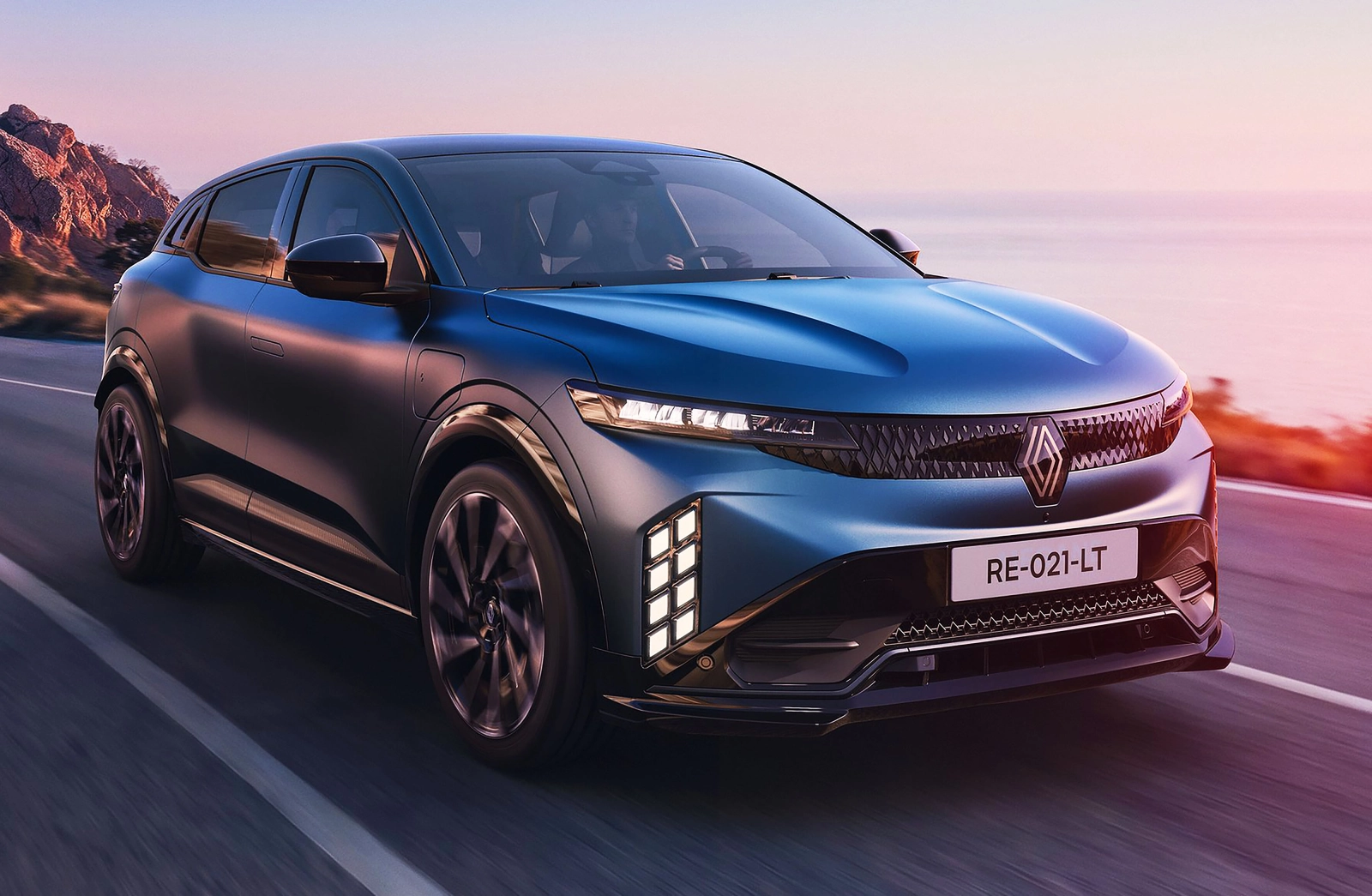
Today, in an extremely dynamic and competitive electric vehicle market, Renault steps up and unveils the new Megane E-Tech electric (model year 2027). This major facelift brings a sharper design, increased electric efficiency, state-of-the-art connected technologies and a simplified trim structure, all to make the transition to clean mobility more accessible for the two out of three buyers who are buying their first electric car.
The new electric Renault Megane E-Tech accentuates its personality with a completely redesigned front end — except for the headlights, all the front elements are new.
To make customer choice easier, the equipment structure has been simplified to just two extremely well-equipped versions: techno (with 19-inch rims and TEP finish for the dashboard) and esprit Alpine (which adds 20-inch rims, interior design details in spectral gray, electric massage seats and a premium Harman Kardon audio system).
Under the hood, the electric compact relies on a wound rotor synchronous motor, produced at the Cléon plant in France, which delivers 220 HP and 300 Nm of torque, without using rare earths.
The big structural innovation is the switch to an LFP (lithium-iron-phosphate) battery with a useful capacity of 67 kWh, based on a compact cell-to-pack architecture (232 cells). This ensures a remarkable WLTP range of up to 500 km.
Charging performance has been visibly improved:
| Charging Type | Power | Performance / Time |
| Direct Current (DC) | Rapid charging at 165 kW | From 15% to 80% in around 24 minutes |
| Alternating Current (AC) | 11 kW standard charger | Ideal for public stations and home charging |
The electric ecosystem includes Vehicle-to-Load (V2L) technology, which allows external 220V devices (up to 3,700W) to be powered through an adapter, as well as the Vehicle-to-Grid (V2G) function, capable of sending energy back to the grid to reduce household costs.
The dynamics have been optimised on the RG medium 1.0 platform (formerly AmpR Medium), by recalibrating the steering and multilink rear suspension. In addition, the new One Pedal function joins the four levels of regenerative braking manageable via the paddles on the steering wheel, allowing the car to come to a complete stop without touching the brake pedal.
Inside, the centerpiece remains the openR link system, made up of an inverted "L"-shaped set of screens: a 12.3-inch digital instrument cluster and a 12-inch multimedia screen. With over 60 updates received since 2022, the system now takes a giant leap forward by integrating Google Gemini artificial intelligence. Drivers can interact with the car using natural language, with the AI understanding the context of the conversation in real time.
Innovation for personalization: The new Megane E-Tech introduces facial recognition via a camera located on the windscreen pillar. Once the driver's profile is scanned, the car automatically adjusts its preferred driving position, media settings and LED ambience. All this data is stored exclusively in the vehicle, in complete security.
Safety is ensured by over 30 assistance systems (ADAS), including intelligent adaptive cruise control, emergency stop assist, Safety Score indicator and an automatic Smart Mode (replacing MySense) that adapts the driving profile based on the driver's behavior. The experience is completed by the new my rnlt mobile application, designed for remote control and intelligent route planning.
The new electric Megane E-Tech retains its rigorous European roots. The vehicle and battery are assembled in northern France at the Ampere ElectriCity complex in Douai, while the electric motor comes to life in Normandy.
Through this updated technological package and a clear orientation towards digital comfort and sustainability, Renault demonstrates that the electric transition is no longer an experiment full of uncertainties like 16 years ago, but a refined certainty, ready to dominate the compact segment.
Although the official importer has not yet published the final price lists for the Romanian market, the traditional strategy of the Renault group and the evolution of the compact electric segment allow us to outline an extremely realistic estimate regarding the launch and costs of the new Megane E-Tech (model 2027).
Launch schedule in Romania. The commercial route of the new model will follow the classic implementation steps of the brand in Eastern Europe. We expect the official opening of the ordering systems in the Romanian dealerships to take place at the end of 2026 or the beginning of 2027. The first physical copies will arrive in showrooms and will be delivered to the first customers in the spring or summer of 2027.
How much will the new Megane E-Tech 2027 cost?. Until now, the higher versions of the pre-facelift model (equipped with the 220 hp engine and 60 kWh battery) were around the 40,000 - 43,000 euro threshold. The new architecture brings a 67 kWh LFP (Lithium-Iron-Phosphate) battery. Although LFP chemistry offers a more advantageous production cost per kWh, the increased capacity and the massive contribution of standard technology (such as the heat pump and the 12-inch openR link system offered directly from the factory) will keep the price in a competitive area.
Taking into account the simplification of the range to just two trim levels, list prices (including VAT, before the application of government subsidies) are estimated as follows:
| Trim Level | Powertrain / Battery | Range (WLTP) | Estimated Starting Price |
| techno | 220 hp / 67 kWh LFP | ~500 km (~310 miles) | €39,900 – €41,500 |
| esprit Alpine | 220 hp / 67 kWh LFP | ~500 km (~310 miles) | €44,500 – €46,000 |
Impact of the Rabla Plus program: As usual, the purchase through the national Rabla Plus incentive program will significantly reduce the final price paid by customers. Depending on the value of the eco-ticket at the time of launch, the effective purchase price for the basic techno version could drop below the psychological threshold of 35,000 euros, turning the Megane E-Tech into one of the most attractive proposals in its class.
The warranty offered by the manufacturer will most likely remain at the current standards of the Renault electric range: 3 years or 100,000 km for the vehicle and 8 years or 160,000 km for battery degradation (guaranteed at a minimum health level of 70%).