
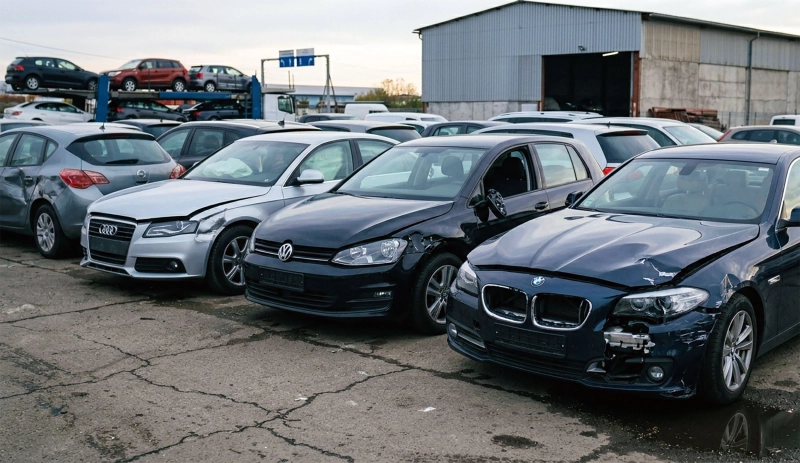
Bucharest – For the Romanian buyer, the phrase "recently brought from Germany, perfectly maintained, accident-free" has been the ultimate selling point for years. However, the reality on the ground, x-rayed in raw numbers, shows a second-hand car market deeply marked by hidden flaws.
A large study published by the automotive data platform carVertical, which analyzed reports generated by users in Romania during 2025, reveals an alarming statistic: the vast majority of imported vehicles hide damage records, the absolute champions of this grim ranking being precisely cars brought from Germany and Belgium.
The Romanian car market's dependence on vehicles from Western Europe remains extremely high. According to centralized data, of the total number of cars inspected by Romanians last year, 60.6% were imported cars, while only 39.4% came from the local market (cars originally purchased in Romania).
When it comes to countries of origin, the preferences of buyers and intermediaries outline a clear top:
| Country of Origin | Share of Total Verified Imports |
| Germany | 20.1% |
| France | 11.0% |
| Italy | 6.7% |
| Belgium | 5.9% |
| Netherlands | 4.0% |
"Countries like Germany, France and Italy have very developed automotive industries. Given that many new cars are sold there, it is natural that, once the leasing periods are over, some of these vehicles are exported to other countries," explains Matas Buzelis, automotive market expert at carVertical.
Although vehicles from Germany are the most sought after, they also pose the greatest risk to buyers' pockets and safety. No less than 88% of cars imported from Germany had a history of damage. In fact, 9 out of 10 cars imported from this market were involved in more or less serious road accidents.
The situation is almost as critical in other Western European states:
German premium brands (BMW, Audi, Volkswagen and Mercedes-Benz) dominate both the import and damage incidence rankings, with BMW leading the way, with a rate of almost 58.7% of damaged vehicles in total queries on the platform. Even though specialists point out that not all the damage recorded in the registers is major (some being simple scratches or replaced body elements), the risk of a car with serious structural damage being sold as “flawless” remains huge.
In addition to cars that have been hit and have been repaired in a hurry, Romanians continue to face the scourge of fake odometers. Data from 2025 shows that sellers are taking advantage of the lack of cross-border transparency to artificially rejuvenate cars.
When it comes to mileage fraud, cars imported from Italy (10.1%) and France (9.9%) are the most problematic. Neither do those from Belgium (7.9%) or Germany (6.7%) escape unpunished by data analysis.
This practice not only empties buyers' pockets at the time of purchase, but also generates huge unsubsidized maintenance costs later, for parts whose actual wear is much more advanced than that indicated on the board.
How is it possible that so many cars with problems reach the Romanian market without the sellers being responsible for repairs or actual mileage? Experts warn that the main problem is the fragmentation of European registration systems.
In many cases, the history of a vehicle remains locked in the national registers of the country of origin and does not cross the borders with the export of the car. Once in Romania, these cars start their bureaucratic life from scratch. Without a thorough check through independent platforms or authorized service networks, the bona fide buyer becomes the perfect victim of a second-hand market still dominated by information asymmetry and speculation.