
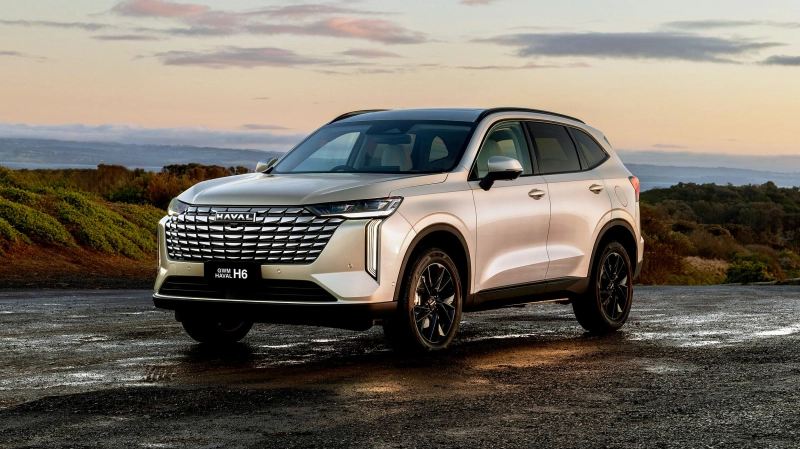
Title: Romania's Great Automotive Challenge: Chinese Giant Great Wall Motors Seeks a 300,000-Car Base, but Romanian Officials Temper Enthusiasm
A Stake of 300,000 Vehicles Annually: Great Wall Motors Returns to Europe with Big Plans
One of the oldest and most important automotive companies in China, Great Wall Motors (GWM), has put Europe on the map of its strategic priorities, aiming to inaugurate a major factory with an impressive capacity of 300,000 units per year by 2029. This gigantic investment, estimated at billions of euros, has triggered a fierce race between countries in the region, and Romania is, at least theoretically, on the short list.
However, the excitement generated by the possibility of attracting a third major automaker has recently been tempered at the highest level. While market sources place Romania among the options being analyzed, Economy Minister Radu Miruță has firmly denied these rumors, describing the information about a GWM assembly plant in Romania as “gossip.”
According to the minister, an investment of such magnitude would require substantial state aid, and the Ministry of Economy has not received any official request in this regard to date. This clarification comes as a cold shower, suggesting that Romania is not currently in the advanced phase of negotiations, unlike its competitors.
Although the car factory remains uncertain, GWM has already taken a concrete step on the local market, establishing a strategic presence in Timisoara. During 2024, the Chinese giant, through its subsidiary, established the company Mind Automobile Part Romania SRL in partnership with the Romanian lighting systems manufacturer Elba.
Initially focused on "Manufacturing of electrical lighting equipment", the Chinese company has quickly increased its stake. An investment of 3 million euros is planned for the second phase, dedicated to the production of aluminum components for the automotive industry. This unit integrates into GWM's global Mind Group network, specialized in vital components: from thermal and electrical transmission systems, to control modules and intelligent driving systems.
GWM's presence in Timisoara, although much smaller than an assembly plant, is a clear signal that GWM sees Romania as a viable hub for component production. Assets such as Schengen entry and the improvement of the highway network have solved some of the logistical problems complained about by investors in the past.
Romania is fighting with states that have already consolidated their position as production bases for Asian manufacturers.
High-cost countries such as Germany are generally avoided, while Turkey remains an attractive logistics option, due to its strategic position and customs union with the European Union.
The relaunch of the European plans comes amid a change in strategy at GWM. In 2024, the company closed its European coordination unit in Munich, laying off around 100 people and moving coordination work internationally.
Despite the restructuring, the company's management stressed that "Europe remains a priority market for development." GWM has set a goal of launching no less than 7 new models in Europe starting from 2026. A distinctive element of GWM's strategy is its multi-energy approach, with the company remaining faithful to both internal combustion engines and hybrid powertrains, not focusing exclusively on electric vehicles, unlike other Chinese rivals.
In conclusion, although Romania has a vital components outpost in Timisoara, the race to attract the large GWM assembly plant is far from won. Recent government statements suggest that, for now, Romania is lagging behind competitors that have already managed to attract massive state aid packages and sign concrete commitments.