
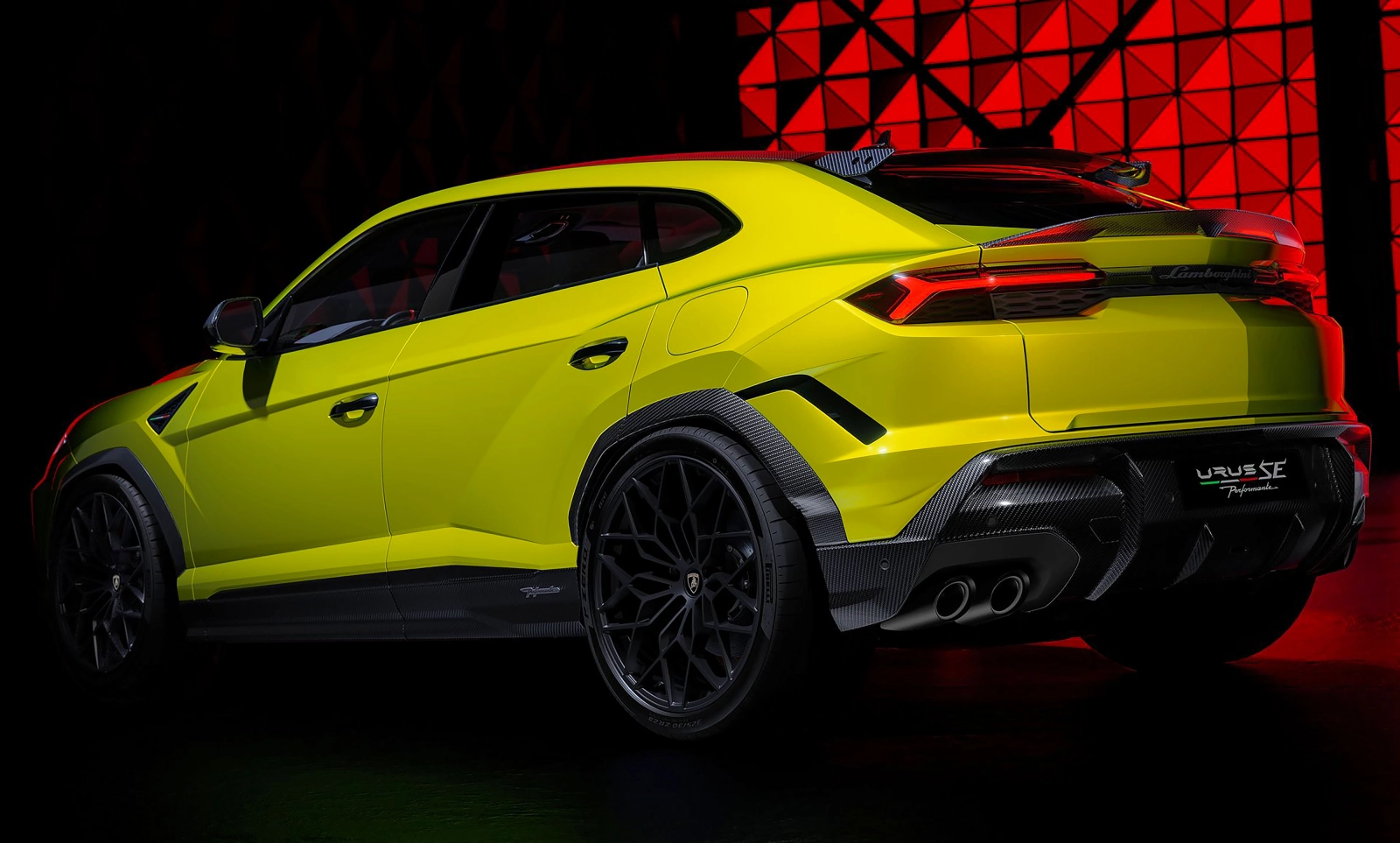
Sant'Agata Bolognese / Bucharest — Italian exotic car manufacturer Lamborghini has reported its highest half-year revenue in its history. However, beyond the spectacular figures on the revenue side, the financial balance sheet reveals a less comfortable reality: the company's operating profit has visibly decreased, directly affected by international tariff barriers and currency fluctuations.
In the first six months of 2026, Lamborghini achieved total revenues of 1.74 billion euros, marking an increase of 7.4% compared to the same period last year. The performance represents an absolute historical maximum for a six-month period.
However, delivery volumes followed a reverse trajectory. The company delivered 5,422 vehicles, down 4.6% compared to the first half of 2025. This decoupling between volume and revenue shows that the record revenues were not generated by selling more cars, but by a product mix oriented towards more expensive models, expanded customization options and price adjustments.
| Financial Metric | H1 2025 | H1 2026 | YoY Change |
| Revenue | €1.62 billion | €1.74 billion | +7.4% |
| Deliveries (units) | 5,683 | 5,422 | -4.6% |
| Operating Profit | €431 million | €395 million | -8.35% |
| Operating Margin | 26.5% | 22.7% | -3.8 percentage points |
Despite the increase in revenue, operating profit fell from 431 million euros to 395 million euros, a decrease of more than 8%. As a result, the operating margin narrowed from 26.5% to 22.7%.
The brand's financial director, Paolo Poma, indicated the following as the main causes:
1. The 25% customs duties applied by the United States on imported cars.
2. The unfavorable evolution of the exchange rate between the euro and the US dollar.
“Our production model offers unparalleled exclusivity, but it directly exposes us to changes in global trade policy,” the company’s financial leadership suggested.
All models in the current range — the Urus, Revuelto and the new Temerario — are produced exclusively at the historic plant in Sant'Agata Bolognese, Italy. From there, the cars are shipped to global markets.
Because the United States is one of Lamborghini's most important markets, and the automaker has no manufacturing facilities in the United States, every vehicle shipped overseas is directly hit with a 25% import tax. The partial or total absorption of these costs has directly eroded the brand's profitability.
While the North American market brings fiscal challenges, the Romanian market continues to show a constant appetite for the Italian brand's supercars, benefiting from membership in the European Single Market (without additional customs duties).
● The King Model in Romania: As globally, the Lamborghini Urus remains by far the most sought-after model by Romanian customers. The super-sporty SUV attracts the vast majority of local orders, being preferred for its versatility on the country's roads.
● Appetite for top options: Romanian buyers frequently opt for Ad Personam customization programs, which raises the average value of a purchase well above the car's starting price.
● Hybrid Performance: The new flagship V12 hybrid, Revuelto, as well as the new Temerario, are experiencing long waiting lists in Romania, with delivery times often exceeding 12-18 months due to huge global demand and limited allocations per region.
Although the volume in Romania represents a fraction of global sales, the local ultra-luxury clientele remains one of the most dynamic in the Central and Eastern European region, unaffected by the tariff fluctuations that curb the brand's margins in the United States.