
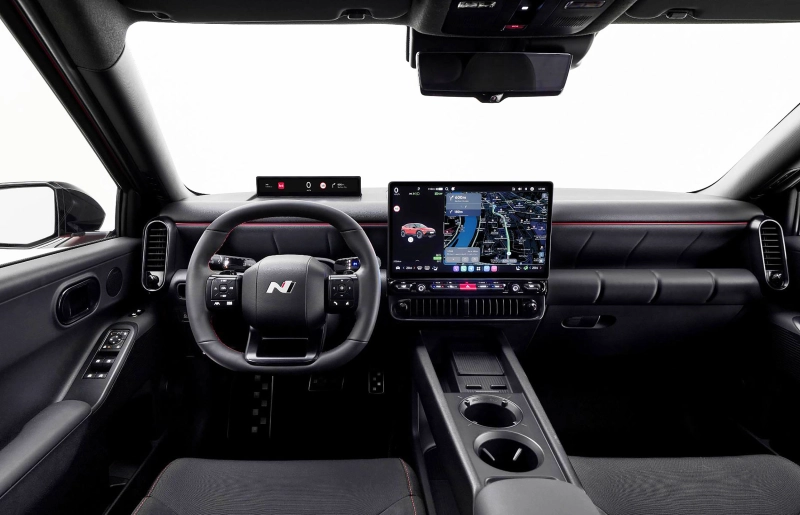
Goodbye, complicated menus and cluttered screens. The Hyundai Group is making a huge bet on simplicity and artificial intelligence through the new Pleos Connect ecosystem, designed to transform the car into a true dialogue partner.
In today's automotive landscape, where dashboard screens have often become a maze of frustrating submenus, the Hyundai Group (which includes the Hyundai, Kia and Genesis brands) is taking a step back to look ahead. The South Korean automaker has officially unveiled Pleos Connect, a next-generation multimedia system that promises to redefine the way we interact with our cars.
The stakes are not small. Hyundai has announced an aggressive implementation strategy: by 2030, over 20 million vehicles within the group will run on the Pleos Connect platform.
The official debut took place on the new Hyundai Grandeur, the brand's flagship in the South Korean market, but the technology is already being prepared for "export". Europeans will get to know this interface with the launch of the long-awaited Hyundai Ioniq 3, the electric crossover that promises to democratize sustainable mobility.
The philosophy behind Pleos Connect is “invisible complexity.” Although advanced algorithms run behind the scenes, the user sees an airy interface, strategically divided into three segments on the main central screen:
“The perfect balance between tactile and physical.” While the screen is the centerpiece, Hyundai hasn’t ignored ergonomic safety. Pleos Connect retains physical buttons on the steering wheel and a control surface below the screen, recognizing that certain functions need to be accessed “by touch,” without taking your eyes off the road.
What transforms Pleos Connect from a simple interface into an intelligent system is Gleo AI. This artificial intelligence-based virtual assistant not only executes voice commands, but also learns the driver's habits to anticipate their needs.
Whether it's adjusting the temperature, suggesting an alternative route based on traffic, or handling important calls, Gleo AI acts as a filter between the car's technology and passenger comfort.
| Feature | Details |
| AI Core | Gleo AI (Natural Language Processing) |
| Driver Display | Ultra-slim display |
| Configuration | 3-zone layout (Safety, Navigation, Quick-Access) |
| Availability | Hyundai Grandeur (current), Ioniq 3 (near future) |
| 2030 Goal | Integration on 20 million cars (Hyundai, Kia, Genesis) |
With Pleos Connect, Hyundai seems to have understood that the future of the automobile is not about “how many functions you can cram onto a display,” but about “how easy they are to use.” In an age of distraction, AI-assisted simplicity could be the South Korean group’s biggest competitive advantage.
Are you curious to see how the Pleos Connect interface will feel on board the new electric models, or do you prefer classic systems with dedicated buttons for each function?