
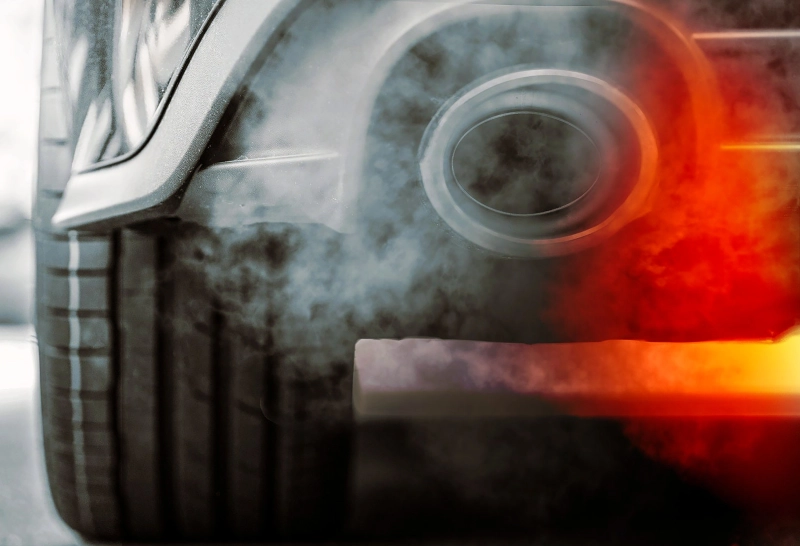
Bucharest, April 4, 2026 – Romania is preparing to put the handbrake on imports of old cars. In an ambitious attempt to clean up the air in big cities and get rid of the label of "Europe's car graveyard", the Executive is finalizing a regulatory act that will officially ban the import of cars with pollution standards below Euro 3.
The measure does not come alone, but comes with tough restrictions for individuals who bring cars "on the assembly line" and with clear prohibitions for vehicles that have been declared total damage in the West.
If until now Romania was the favorite destination for cars that "still run", even though they are long past the age of majority, the new rules completely change the rules of the game. Non-Euro, Euro 1 and Euro 2 cars - vehicles that are, on average, over 30 years old - will no longer be able to be registered if they are brought from outside the country.
"We can no longer accept that Romania is the recycling solution for other states. A Euro 2 brought to the streets today is not only an environmental problem, but also a road safety problem," government sources said.
Another heavy blow is dealt to the gray trade in used cars. The draft law provides for a limitation on the number of vehicles that an individual can bring into the country.
There will also be a strict ban on the import of vehicles declared total damage in the country of origin. This measure aims to eliminate “puzzle cars” — wrecks that have been improvisedly repaired and sold as “accident-free.”
The statistics for the beginning of 2026 are worrying. Romania continues to have one of the oldest car fleets in the European Union:
| Indicator | Value (2026) |
| Average age of the car fleet | 15.6 years |
| European Union average | 12.7 years |
| EU ranking | 4th place (after Czechia, Estonia, and Greece) |
| Vehicles older than 10 years | Over 7 million |
Although registrations of electric and hybrid cars have increased spectacularly in the last year (exceeding 50% of total new cars sold), the "weight" of the car fleet remains given by the millions of old diesel engines that still dominate national roads.
The import ban measures are doubled by the new car tax formula, which came into effect on January 1, 2026. Unlike previous years, the tax is no longer calculated solely based on cylinder capacity, but severely penalizes low pollution standards.
Owners of Euro 3 and Euro 4 cars are already facing increased local taxes, a "stick and carrot" strategy aimed at pushing Romanians towards Rabla-type programs, which in 2026 place a massive emphasis on vouchers for alternative mobility or zero-emission vehicles.
Through these restrictions, the government hopes to force a sudden “rejuvenation” of the national fleet. However, the question remains: will the subsidies for new cars be large enough to compensate for the disappearance of cheap imported cars? For many Romanians, the 2,000-euro car was the only mobility option, and banning it could leave a gap in the local car market that is hard to fill.