
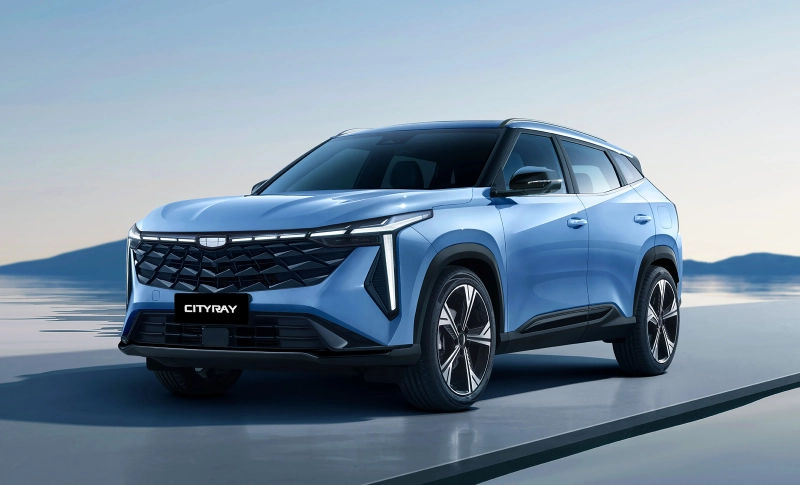
While previous generations remain loyal to local brands or European and American giants, a new seismic wave is hitting the automotive industry. A recent study conducted in the United States reveals a reality that seemed impossible a decade ago: young people from Generation Z are ready to give up prejudices and get behind the wheel of cars produced in China. The phenomenon is not limited to overseas; in Romania, sales figures and the increasingly visible presence of new brands on the streets confirm that the road to the future passes through Beijing and Shenzhen.
According to the survey conducted in the American market – traditionally a difficult terrain for Chinese manufacturers due to tariff and political barriers – young people born between the mid-1990s and the early 2010s are the most receptive to the Asian offer. The figures are telling: 69% of Generation Z respondents said they would consider purchasing a Chinese car.
Of these, 38% say they are “extremely likely” or “very likely” to take the plunge into such a vehicle, while the remaining 39% remain in a zone of moderate skepticism. The reason? For Gen Z, the car is no longer necessarily a symbol of social status linked to the history of a brand (like Mercedes or Ford), but a technological device on wheels. The price-technology-design ratio matters more than the brand’s “pedigree”.
The study also highlights a branding problem: while interest is high, technical knowledge is superficial. BYD (Build Your Dreams), the giant that is battling Tesla for global supremacy in electric cars, is the most well-known Chinese brand, with a 35% awareness. However, only 17% of those surveyed can provide concrete details about their models.
The top of the list of brands is rounded out by Chery (30%), followed by Geely (parent company of Volvo and Polestar), Changan and Jetour. This discrepancy suggests that once these companies invest heavily in direct marketing, the adoption rate could explode.
In Romania, the reluctance towards Chinese products is quickly melting under the pressure of competitive prices. If a few years ago the only notable presence was the Dacia Spring (produced entirely in China, at the Shiyan plant), today the local automotive landscape is undergoing a radical transformation.
Specialists in the Romanian automotive industry explain this success through three key factors:
Skepticism still persists among the generations over 45-50, who associate "Made in China" with poor quality products. However, for young people who were born with high-performance Chinese phones in their hands, switching to a Chinese car is a natural step. As service networks expand in Romania, and brands like BYD become household names, the country's automotive map will change forever. The future of motoring no longer speaks only German, but increasingly Mandarin.