
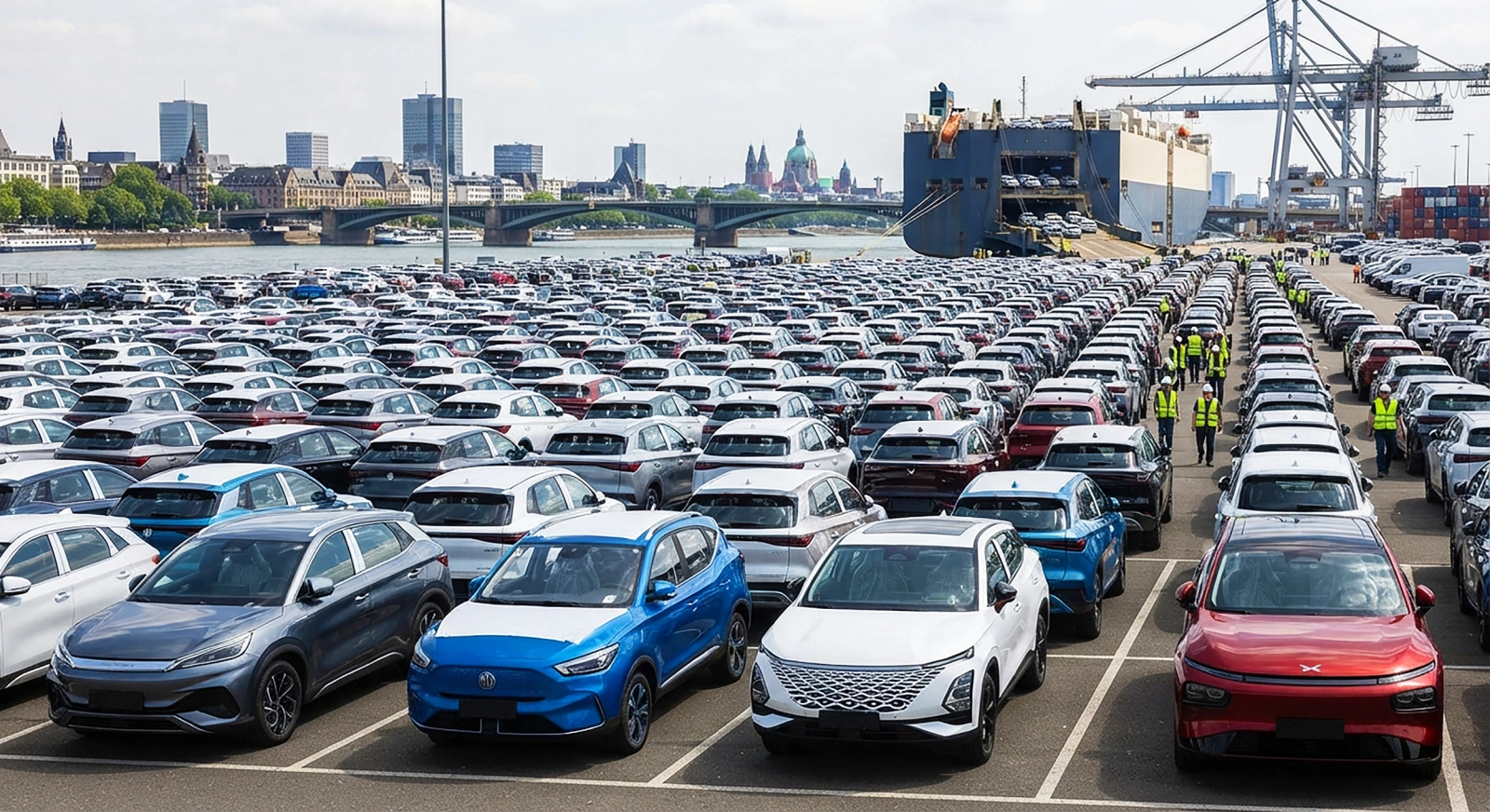
The global auto market is undergoing a radical transformation, with the center of gravity shifting rapidly towards Asia. In the first seven months of 2026, imports of Chinese electric cars into the European market increased by 14% (reaching a 14.2% advance in Western European markets) compared to the same period last year. The European Union and the United Kingdom are practically flooded with models coming from China, signed by giants such as BYD, Chery, SAIC and Xpeng, fueled by increasingly strong domestic and foreign demand.
This sales boom in Europe is happening despite protectionist measures taken by Brussels, which has raised import tariffs on Chinese electric vehicles to 35.3%. However, Asian manufacturers are managing to absorb these costs thanks to highly integrated supply chains and massive subsidies at home.
A huge loophole for Chinese manufacturers remained the United Kingdom, which became the largest single market for these brands in Europe. The British government refused to follow the European Union's tariff policies, turning the island into an extremely profitable bridgehead for the expansion of Asian models.
For traditional auto giants, competition is becoming a logistical and financial nightmare. World-renowned manufacturers such as Toyota Motor (Japan) and Volkswagen (Germany) are increasingly pressured by fierce competition, forced to readjust their strategies and lower prices to avoid losing ground to much more affordable and highly technological vehicles, Reuters reports.
While Chinese brands come with huge smart screens, generous battery life and discount prices, European and Japanese manufacturers face high production costs in the domestic market.
The global paradox: Conquering Europe, but losing ground in other regions
The meteoric rise of electric cars in China is not uniform globally, however. While Europe is buying in droves, Chinese manufacturers have seen a decline in customers in countries such as Brazil, Thailand and the Arab states.
A telling example is Brazil, which decided to gradually increase import taxes on electric cars to the same level applied to classic fuel-powered cars, immediately tempering the enthusiasm of local buyers and forcing Chinese manufacturers to seek alternative local production solutions.
Romania is no exception to the continental trend. If just a few years ago Chinese manufacturers were viewed with reluctance, the year 2026 marks a complete maturation of these brands on our roads.
● The affordability offensive: Almost one in ten new cars recently registered in Romania comes from a Chinese brand, drivers being attracted by the excellent price-to-feature ratio.
● Top players: Brands such as MG (under the umbrella of the SAIC group, with the bestseller MG ZS), BYD (which brought to Romania extensive ranges of electric and plug-in hybrids such as the Seal U), along with the models of the Chery group (Omoda) and the entry plans of Nio or Geely, dominate the discussions in the showrooms.
● Pricing strategy: With prices often starting below the 20,000–25,000 euro threshold for well-equipped models and extended warranties (e.g. 7 years or 150,000 km offered by MG), Chinese cars have become the direct alternative to established models like the Dacia Duster or other European compact SUVs.
As 2026 progresses, it becomes clear that the Chinese wave is no longer just a passing fad, but a structural reality that is forcing the global auto industry into a profound reinvention.