
A subtle but persistent earthquake is shaking the foundations of the global automotive industry. It is not a crisis, but a new competitor that is accelerating at a dizzying pace: Chinese car brands. This rise is no longer a mere prediction, but an undeniable reality, recognized even by established giants such as Porsche.
The official statement from a leader at Porsche China highlights a paradigm shift.
In the context of increasingly fierce competition, especially in the world's largest automotive market, China, Alexander Pollich, CEO of Porsche China, expressed sincere admiration, but also strategic concern, in an interview with the German publication Automobilwoche.
“The pace of innovation in China is breathtaking, as is the variety of products available, and pricing and marketing strategies seem to change from day to day,” said Pollich.
This speed of development translates into:
Leading Technologies: Chinese brands, led by giants like BYD, Nio, Xpeng, or Geely, are not only keeping up with electrification, but are also rapidly innovating in areas like autonomy, batteries (e.g., BYD's Blade batteries), artificial intelligence, and the digital onboard experience.
Aggressive Segmentation: A constant stream of new models, tailored to local and global tastes, covering niches that traditional manufacturers have left untapped.
Dynamic Pricing and Marketing Strategies: The ability to adjust prices and launch marketing campaigns almost instantly gives them a tactical advantage in the highly volatile market.
Chinese brands have become serious competitors for manufacturers in Europe, Japan and the US, especially in the electric vehicle (EV) segment, where they offer promises of generous autonomy and innovation at competitive prices.
The recognition of this dynamic comes amid recent difficulties for Porsche in the Chinese market. The German brand's sales have fallen significantly:
| Period | Porsche China Sales | Decline vs. Previous Year |
| Year 2024 | 56,887 units | -28% |
| January - September 2025 | N/A | -26% |
To counter this trend and respond directly to Chinese innovation, Porsche has launched the strategic plan “Winning Back China.” It is based on two major directions:
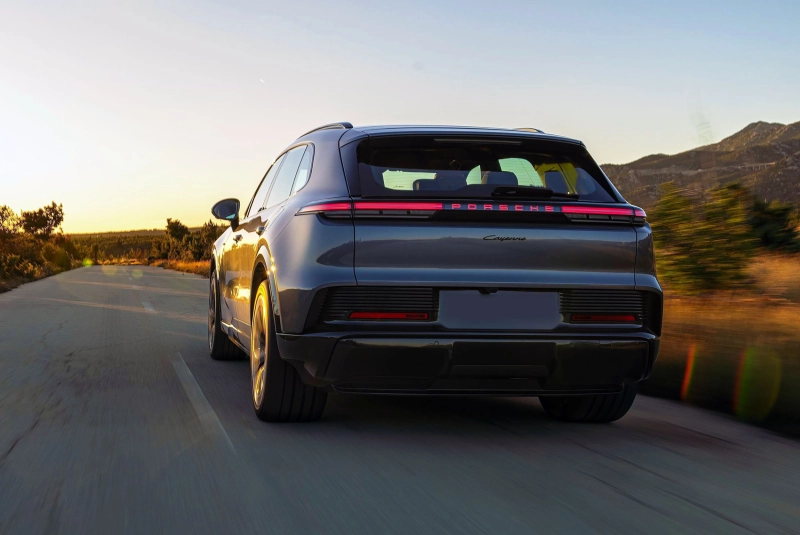
Performance Electrification: Launch of new, ultra-high-performance electric models, such as the new Cayenne Electric and the upcoming electric successor to the 718 Cayman.
Maintaining Internal Combustion Engines: Continuing the offer of models with internal combustion engines, including a new Macan with internal combustion engine, expected in 2028, demonstrating a dual strategy to cover all customer segments.
Although Romania is not as directly exposed as the Chinese market, the pace of innovation of Asian brands has a profound and indirect impact on the local automotive industry, mainly based on production for European manufacturers.
1. Pressure on Local Suppliers
The Romanian automotive industry is a pillar of the economy, with an extensive network of suppliers (Tier 1, Tier 2) that deliver parts and components to European giants (Dacia/Renault, Ford, but also other German or French OEMs).
Accelerated Demand for Innovation: Chinese competition is forcing European manufacturers to innovate faster. This means that Romanian suppliers must adapt quickly to the production of components for electric vehicles, advanced driver assistance systems (ADAS) and connectivity technologies, under pressure to reduce costs.
EV Transition: Investment in components for combustion engines is declining, while investment in EV components (high-voltage wiring, battery housings, electronics) must increase exponentially. Suppliers that fail to make the transition quickly risk becoming irrelevant.
2. Competition in the Internal Market
Although volumes are still small, Chinese brands are gradually entering the Romanian market.
Affordable EV offering: Chinese brands can offer electric vehicles with competitive specifications (long range, on-board technology) at lower prices than European equivalents. This puts pressure on Dacia/Renault and Ford in the volume segment, forcing them to adjust their pricing and offering strategies.
The Digital Challenge: Chinese cars are often equipped with highly advanced and digitalized user interfaces. European manufacturers (and their R&D and production teams) must respond with a similar or superior user experience.
3. Local Opportunities
In the long term, this accelerated pace also brings opportunities:
Attracting New Investment: As Chinese brands expand into Europe, they may seek production bases or R&D centers in countries with skilled labor, such as Romania, to avoid import duties and shorten supply chains.
Increasing Quality Standards: Competitive pressure drives domestic producers to achieve higher standards of excellence and speed of response, thus benefiting the entire economy.
In conclusion, Porsche's recognition of Chinese speed is a global wake-up call. For Romania, the echo feels like a force that compels us to accelerate our own transformation, from a production base centered on the internal combustion engine to a pole of innovation and components for the electric and digital future of mobility.