
FRANKFURT – The European car market is facing a turning point. In a strategic move to circumvent new European Union tariffs and stricter local content rules (“Made in Europe”), Chinese car giant BYD is set to sign a deal to acquire a brownfield car factory in Europe.
Recent statements by Alfredo Altavilla, BYD's special advisor for Europe, made at the Reuters Automotive Europe conference in Frankfurt, have set the industry on fire: two teams from the Chinese manufacturer are currently evaluating sites in Spain and France. A final decision is imminent.
Although Altavilla has maintained official discretion over the exact name, the puzzle pieces behind the scenes of the industry and recent statements from BYD management point to a clear target: the Stellantis group.
BYD's global vice president, Stella Li, confirmed that the Chinese giant is in active discussions with Stellantis, as well as other European manufacturers, to take over unused production capacities. Here are the hottest hypotheses on the analysts' table:
For the Chinese, building a factory from scratch (greenfield investment) takes too long. In the context where European customs duties on electric cars imported from China can reach up to 45% for some companies, BYD needs a "turnkey" solution.
“There is no time to start a factory from scratch today. All you can do is find an existing plant, take it over and retrofit it.” — Alfredo Altavilla, special advisor to BYD Europe
Moreover, the EU's upcoming Industrial Accelerator Act (IAA) will impose strict local production criteria for cars to qualify for government subsidies. By taking over a functioning plant, BYD can begin local assembly in record time.
The figures clearly show why BYD can afford to play on the offensive while the Europeans retreat:
| Indicator | Performanță BYD în Europa | Contextul Constructorilor Europeni |
| Vânzări (anul trecut) | +270% (~188.000 de unități) | Stagnare post-pandemică, fabrici la jumătate din capacitate |
| Vânzări (primele 5 luni) | Dublare (peste 100.000 de unități) | Scăderi ale cererii pe segmentul EV tradițional |
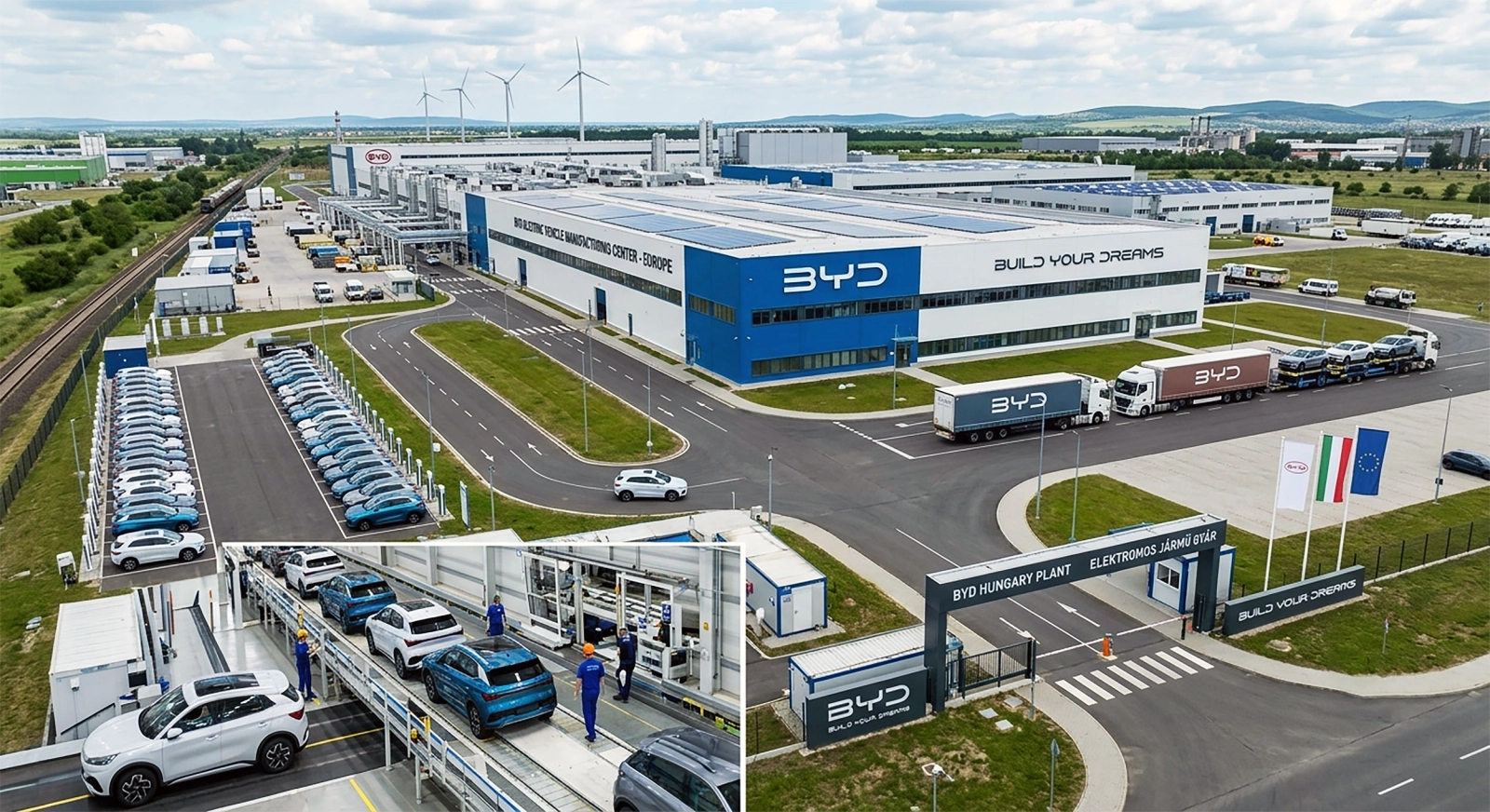
| Strategie de Producție | Fabrica din Ungaria (start în Q4) + A doua uzină vizată acum | Volkswagen analizează restructurări istorice (până la 100.000 de disponibilizări și închiderea a 4 fabrici în Germania) |
While giants like Volkswagen are receiving what Altavilla called "a brutal first warning signal," BYD is strictly following its plan: transforming Europe into a market where 70% of cars sold locally are also produced locally.
Whether the final decision will target a regional Stellantis plant or a historic move on a brand like Maserati, one thing is certain: the Chinese electric "invasion" can no longer be stopped by simply raising tariff barriers, but is moving directly into the backyard of European manufacturers.