
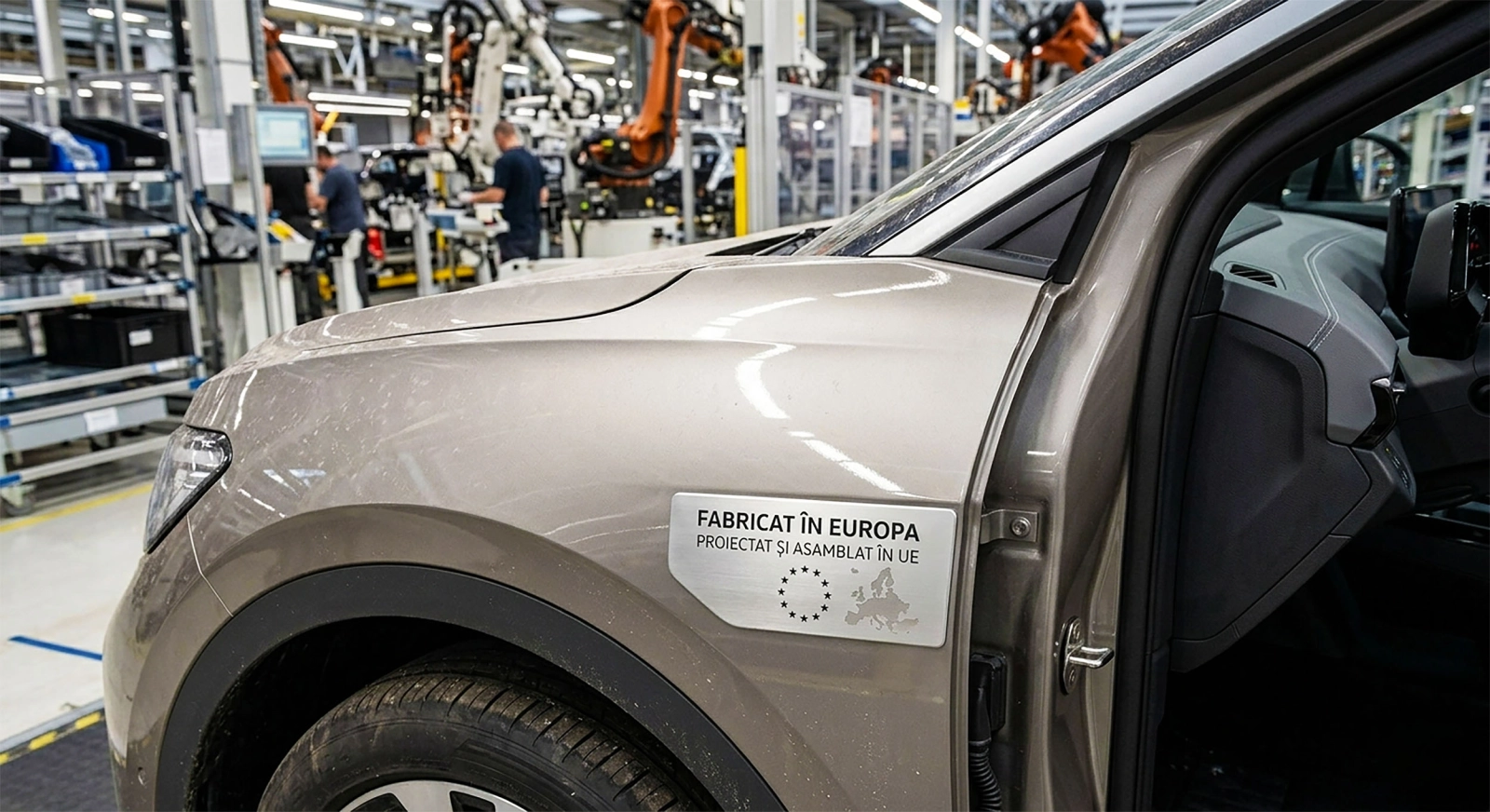
The three big car giants, which together control about 60% of production on the continent, have sent a joint letter to the European Parliament. They are calling for 70% of the value of every car sold in the EU to come from the bloc, warning of a collapse of the local market.
In a rare move of unity in the industry, the main pillars of European car manufacturing – Volkswagen, Stellantis and Renault – have joined forces to launch an urgent appeal to decision-makers in Brussels. Faced with aggressive global competition and a difficult electric transition, the manufacturers are calling on the European Union to immediately adopt a “Made in Europe” rule and introduce massive incentives to support local plants.
Through a joint letter addressed to members of the European Parliament, the three car groups proposed a clear protective barrier: 70% of the value of vehicles sold in the European Union must be generated within the community bloc consisting of the 27 member states.
Unlike other simple protectionist measures, this requirement is designed to cover the entire value chain, not just final assembly. Builders are requesting that the percentage include:
The European Union is currently considering the possibility of introducing a "Made in Europe" framework within its industrial policy for green mobility, but manufacturers warn that the legislative pace is far too slow in relation to market reality.
The three manufacturers' desperate appeal comes against a backdrop of grim economic reality. Demand for cars on the continent remains extremely weak, with the industry failing to fully recover from successive shocks in recent years.
"We are fully committed to maintaining a strong industrial base in Europe, but this objective is entirely dependent on the existence of a more realistic regulatory framework," said representatives of Volkswagen, Stellantis and Renault.
According to data submitted by companies, around 3 million fewer vehicles are currently being sold in Europe per year compared to the 2019 baseline. This unused factory capacity is putting huge pressure on manufacturers' fixed costs and directly threatening thousands of jobs.
2019: [████████████████████] Baseline
2026: [███████████████ ] -3 million vehicles
This joint initiative expands on a previous lobbying effort by Volkswagen and Stellantis, which called for preferential treatment for locally produced electric vehicles (EVs). Together with Renault, the list of demands has evolved into a rescue plan structured around three pillars:
The ball is now in the court of the European Parliament and the European Commission. With Europe having committed to banning the sale of new cars with combustion engines from 2035, the pressure on traditional manufacturers is enormous.
If Brussels adopts the 70% rule, the entire map of global suppliers will have to be redrawn. Otherwise, industry leaders warn, Europe risks permanently losing its industrial sovereignty to competition from China and the United States.