
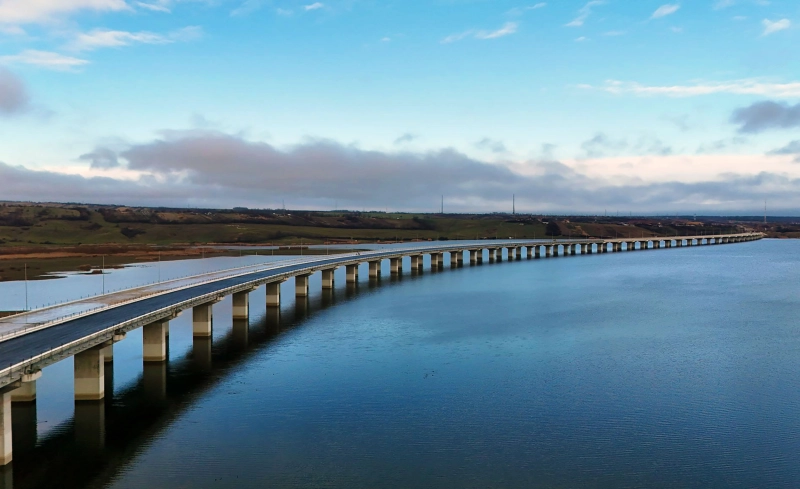
Cluj-Napoca – Oradea. After years of promises blocked in canceled tenders and hills that "go downhill", the year 2026 is announced to be the turning point for the infrastructure in northwestern Romania. The authorities in Bucharest and representatives of the National Road Investment Company (CNIR) confirm: almost 100 new kilometers of the A3 Transylvania Highway will be returned to traffic, radically transforming the map of travel times between Cluj, Zalău and Oradea.
Currently, the noise of machinery dominates the landscape between Nădășelu and Poarta Sălajului, but also on critical segments in Bihor County. Although winter imposed a more cautious pace, the builders took advantage of the freezing periods to work on the resistance structures.
For Romanians in the west of the country, the paradox is a decade old: they get to Vienna faster than Bucharest. The opening of the 100 kilometers in 2026 will partially correct this anomaly, offering a high-speed alternative to the congested national roads (DN1 and DN1F).
According to current estimates, the 100 km package consists of:
Zimbor – Poarta Sălajului (12.24 km) – with a high chance of completion in the first part of the year.
Nădășelu – Zimbor (30 km) – conditional on the completion of the two new viaducts.
Suplacu de Barcău – Chiribiș (26.35 km).
Chiribiș – Biharia (28.5 km) – where current mobilization suggests an advance of the contractual term.
The completion of these lots does not only mean comfort for tourists, but also an oxygen lung for freight transport. The connection through the Borș II border point will thus become the main exit gate for goods from Transylvania to the rest of the European Union, eliminating traffic bottlenecks in the Bihor and Sălăraș localities.
However, there remains a famous "missing link": the Meseș Tunnel. Until its completion (estimated for 2028-2029), traffic will be unloaded onto the Zalău city ring road, still ensuring considerable fluidity compared to the current route.
If you are planning a trip along the A3 and want to explore Transylvania's attractions more easily, you can opt for rental cars for trips through Transylvania, giving you greater flexibility throughout your journey.